Wednesday, February 20, 2013

Issue 7


Dear friends,

We hope 2013 has started out well for you.  In these fairly early days of the new year, we're thrilled to bring you the seventh issue of Beguile.  From autobiographical poetry and a memoir excerpt, to a story whose author puts himself in the skin of a witness to a bizarre historic event, the written work in this issue explores how we see our lives, and the lives of others. Artist Sharon Watts completes this issue's biographical theme, with her collages featuring found objects that she assembles to create new stories, and to recall stories of her own.  We hope you enjoy these life stories, and we hope that your own life will be full of health, happiness, hope, and inspiration in 2013!


Happy Reading and Viewing,

Alysa Salzberg, Editor-in-Chief
and
The Beguile Team


CONTENTS

In this issue of Beguile...

Writing 

Heidi Baker brings vivid moments to life in her poems CarriedWaiting in July, and On My Wooden Bench.


In an excerpt from her memoir FOCUSIngrid Ricks shares a troubling vision from her life.

Steve Sherman takes us back in time to an unusual event on a remarkable ship, in Death on the SS Great Eastern.


Art

It's our immense pleasure to feature three collages by versatile artist Sharon Watts.  About her life and art, Sharon writes, "I am an illustrator with a background in fashion and children’s books, and also an assemblage and collage artist.  My art websites are www.sharonwatts.com and www.dirndlskirt.com.  My writing can be found at www.sharonwattswrites.wordpress.com/

I am finishing up adding visuals to a memoir of my art student years in NYC (the early 1970s) entitled Hell’s Kitchen and... which will most likely be self-published in 2013.  I still ‘heart’ New York, but the one I’ve saved in my heart all these years is the one I love best.”

As for the inspiration behind the collages featured in this issue, she explains, "I cannot let go of innocuous packaging that once protected something quite ordinary. Other things find me as I walk down the street—trinkets fallen from cheap charm bracelets, scraps of paper, glass, or metal--objects with former lives, however humdrum. I assemble them, working with my own encyclopedia of symbolism reflecting memory, emotional connectedness, miscommunication and loss--all under the umbrella of how human strength co-exists with human fragility. The Illuminate series reflects the theme of protection and includes souvenirs of religious cards from my travels."


We'd like to say a HUGE "Thank you" to all of the contributors to this Issue!  Thank you for your patience, support, and most of all, your wonderful work.

And now, without further ado, prepare to be beguiled!


Carried
by Heidi Baker

single syllable sentiments
love, blessed, life
solid matters, my opinion
details of a single moment
all disappear
in a walking meditation
one mile at a time
no beat holds me steady
the sun, a promise
carries my frame
accompanied by a fragile silence
a link to grace
i am neither free
nor branded
i am
a smiling whisper
holding the cord
of faith

________________________

ABOUT THE POET
Heidi is a nomad who has been writing since she could reach the keys of her mom's old manual typewriter. She has a passion for capturing the beauty of a single moment and getting to the heart of what is real. In October 2012 she published a collection of poems titled Love Story: A Walking Meditation, which is available for both Kindle and Nook.

ABOUT THE POEMS
One might call Love Story: A Walking Meditation a recent-history lesson in verse, or simply my record of time passing in a world of spirit cloaked in matter, a world of beauty (even amid challenges) I can touch only when I am still, present, seeking nothing but a way to relate the miracle that is everyday life.


Illumination 2
by Sharon Watts


Chapter 1 of FOCUS - A Memoir 
by Ingrid Ricks


There was something wrong with the machine.

For the past five minutes, I’d been staring into a large, box-shaped medical device, waiting to have my peripheral vision checked. The eye doctor’s assistant, a thin, blonde woman with a chin-length bob and caked-on makeup, told me that all I had to do was press on the clicker I was holding whenever I saw a white dot flash anywhere inside that metal box. Simple enough.
Except that after pressing my forehead against the headrest for so long I felt a crease forming, I still hadn’t seen a flashing dot.

“When are you going to start the test?” I finally asked the woman, still pushing my forehead against the headrest. I needed to get it over with so I could pick up my five-year-old daughter from her Montessori school and get her to a children’s music group audition twenty miles away.

“It’s been going for a while,” she replied. She was young—no more than twenty-three or twenty-four. I couldn’t see her face now because of the box I was staring into, but I imagined it was blank and a bit dazed. She was probably thinking about where she was going to party that evening, and the idea that she was so checked out she couldn’t even properly administer the test irked me. I jerked my head away from the box and shot her an annoyed look.

“Well, it’s not working then, because nothing is happening.”

I stepped out of the way so the assistant could check it out for herself. She positioned herself on the stool, pushed her forehead against the headrest, and gazed through the small window into the box.

“It seems to be working fine for me,” she announced a minute later, pushing herself away from the machine and resuming her testing position. “Why don’t we try it again?”

Her words jarred me. And something about the way she said them felt like a thousand tiny needles all jamming into my skin at once. She didn’t look at me when she talked, but I could tell it wasn’t out of complacency. She suddenly seemed very attentive and serious—and I liked this version of her even less. For the first time since I had heard the words degenerative eye disease the day before, panic shot through me. I took my seat in front of the metal box and picked up the clicker.

“Ready?” she asked.

“Yeah.”

I waited for the flashing lights. Nothing. My stomach was a tangle of knots and they were pulling so tight I could hardly breathe. I jerked my forehead back from the headrest a second time and stood up from the stool.

“It’s just not working,” I declared, trying to keep my voice steady.

“I’m going to get the doctor,” the assistant mumbled. “Why don’t you just take a seat in the chair?”

My body found its way into the black reclining patient chair. I could feel my hands shaking but I couldn’t stop them. I didn’t want the eye doctor to see me cry but I couldn’t keep the tears in. The meaning of his quiet, serious words from the previous day were suddenly taking hold.

The eye doctor walked into the room and put his hand on my knee. He didn’t speak for a few minutes; he just left his hand there while I sobbed. He was about my age—somewhere in his mid-to-late thirties—and only twenty-four hours earlier, we were joking and swapping stories about our toddlers. Now, he was patting my leg and comforting me like I was a toddler myself.

“We already knew this wasn’t going to be good,” he started out slowly, carefully choosing his words.

What do you mean, WE? I wanted to shout back. It’s true he had told me that the spidery pigment he saw when he looked into the back of my eyes resembled something he referred to as Retinitis Pigmentosa. And when I Googled the foreign-sounding words later that evening, some of the symptoms—such as night blindness and loss of peripheral vision—matched what I had been experiencing. But the information I found online also said it was a hereditary disease and, as far as I knew, not a single person in my extended family had anything like this.
What’s more, the information I found said that people with RP were legally blind by age forty, but at thirty-seven, I had perfect 20/20 vision. Then there was the final bit of information that had made me turn off my computer—the part about losing all remaining eyesight by your mid-fifties. I reminded myself that the eye doctor had told me he was only guessing at the RP diagnosis. Clearly he had made a mistake.

“We don’t have to do this today if you don’t want to,” the eye doctor continued in a gentle tone. “Either way, the end result is the same. I need to send you to a retinal specialist.”

He pulled a stool next to me, sat down, and handed me tissues to catch the flood of water escaping my eyes. It was humiliating to have him see me like this, and in a desperate attempt to end my blubbering, I bit my lip so hard that it started bleeding. In my mind, I debated whether the test was even necessary. The doctor already knew the answer and at this point, I knew it too.

“Let’s do it,” I said after finally calming down enough to speak. “I want to know where I’m at.”

“Are you sure?” he asked. I could hear the hesitation in his voice and sensed he was already bracing himself for my next meltdown.

“Yeah. I’m sure.”

The eye doctor left the room and the assistant appeared a minute later to administer the test. She avoided looking at me. It was clear she wanted this over as much as I did.

I pressed my now-swollen eyes up to the peephole for a third time and once again held the clicker in my hand. After about ten minutes the test was done and the assistant left. A few minutes later, the eye doctor was back with my test results—displayed in the form of two 8 ½ x 11 sheets of paper.

“These two pieces of paper represent your field of vision—which in a healthy person is ninety degrees in each eye,” he explained in the same gentle, quiet voice I now knew to associate with bad news. “The area in black ink is the area where you’ve lost your vision. The unmarked area represents the vision you have left.”

I stared at the two pieces of paper he had placed in front of me. They were both covered in black ink, with an untouched circle in the center of each and a sliver of white that looked like a big smiley-face underneath each eye. The top of one sheet contained the words Left Eye. The other sheet was titled Right Eye.

“So what does this mean?” I asked, not sure I wanted to hear the answer. “How much do I have left?”

“About ten degrees in each eye,” he returned, not looking at me.

I had heard all I needed to hear. During my Internet research the night before, I had read that a person with a ten-degree visual field or less in each eye is considered legally blind.

“I have to go now,” I managed. I jumped out of the chair and sprinted to the door. There was no way I was going to let him see me lose it again.

I held back the wailing sobs until I reached my car, locked myself in, and laid my head against the steering wheel. I had experienced fear plenty of times in my life. But it was nothing compared to the terror that was now gripping me.

I don’t know how much time elapsed. But it suddenly hit me that I needed to pick up my five-year-old daughter, Syd, at her Montessori school. I was supposed to take a twenty-minute drive on a busy interstate to get her to the children’s music group auditions she had been asking me about all week. After that, I needed to battle the freeway traffic back to the rural town where we lived so I could pick up my other daughter, Hannah, who was about to turn two, from her daycare. Then I needed to stop by the grocery store, pick up some food, head home and make dinner.

I had to pull myself together. I had to think. But I was in such a fog I was having a hard time remembering how to breathe.

What was I supposed to do?

All I wanted to do was curl up in a ball in the back seat of my car and go to sleep so I could wake up and discover that this was all just a bad dream.

I kept my head resting against the steering wheel for a few more minutes, unable to will myself to move. Then it occurred to me to call John.

I grabbed my phone and punched in the numbers to my husband’s cell phone. I got his voicemail.

“John. I’m going blind,” I sobbed into the handset. “I’m practically already blind.”

______________________________

ABOUT THE AUTHOR
Ingrid Ricks is a Seattle-based journalist, author, marketing consultant and teen mentor who leverages the new world of digital publishing to give at-risk teens a voice. Using her award-winning debut memoir Hippie Boy: A Girl’s Story as a teaching guide, she recently co-launched WeAreAbsolutelyNotOkay.org, a nationally recognized mentoring/publishing program that helps at-risk teens find their voice by writing and publishing their personal stories.

Ingrid’s essays and stories have been published in Salon, Ladies’ Home Journal, The Advocate and a variety of other publications. Her books include Hippie Boy: A Girl’s StoryFOCUS, and A Little Book of Mormon (and Not So Mormon) Stories.  You can learn more about them and her at her website, ingridricks.com. 

ABOUT THE MEMOIR
More than anything, my journey with my degenerative eye disease has taught me that no one is immune to disease or death, life can change in an instant and all we have for certain is now -- so we better make NOW count.  I wrote FOCUS, in part, because I want to put a human face on devastating diseases and the struggles people face. But more than that, I wanted to share my story in hopes that others who are feeling stuck in their lives will realize that it's never to late to go after their dreams, change relationships that aren't working, and create the life they want for themselves."


Illuminate 3
by Sharon Watts


Waiting in July
by Heidi Baker


on our front step, alone
cicada song, coffee, hazelnut chocolate
the air is wet and heavy, at dusk
i’m in love
lawn to mow, laundry to fold, bushes to trim
i left a list on the passenger seat
grey clouds, pink tones
nothing moves overhead
our house is an empty shell
every letter matters
i’m a walking meditation in this heat
i could weep, let flow a river, if I stayed awake all night


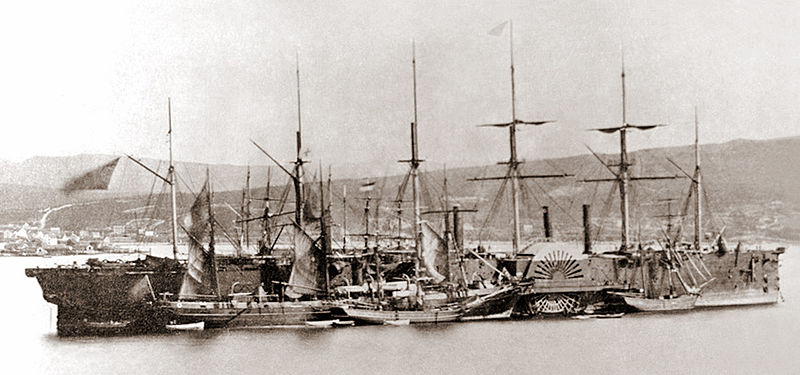
Death on the SS Great Eastern
by Steve Sherman


The following letter was taken from a diary presumed to be written by Augustus Cary, Ninth Mate on the SS Great Eastern.

The entries appear as letters to Miss Margaret Stevenson. Since no original letters are known to exist, it can not be known whether these are the text of actual letters, or simply a literary device used by Mr. Cary when writing in his diary.

Besides this diary, the only other known example of Mr. Cary's writing is a treatise on growing cranberries, published in the annals of an agricultural organization in Wisconsin.


September 6, 1859
London

My dearest Margaret,

I remain aboard the Great Eastern, still moored near Shoreditch. We did not begin our maiden voyage on schedule, as there is still much left to complete the ship's fitting out. Several crews can be seen above and beneath deck, installing equipment needed to sail a ship of this size. The gangplank sees a never ending line of men carrying kitchen and dining supplies, beds and other furniture for the cabins. Above this procession, workmen can be found everywhere pounding hammers against rivets to make a chorus of echos in this iron ship. Amongst this din of metal against metal, other men hang chandeliers and arrange furniture in the passengers' galleries and cabins.

We are scheduled to begin our maiden voyage tomorrow. I wait anxiously for that moment when this great vessel will commence moving me closer to you. At nearly every spare moment, I think of you. I reckon that by now you have safely arrived in Detroit and are assisting your brother in his general store. How I long to join you!

Captain Harrison called me away from my usual duties today for a most unusual and ultimately disturbing watch. Captain Harrison informed me that I was to escort Isambard Kingdom Brunel, the renowned engineer who designed the Great Eastern, as he inspected his creation. The captain advised me to exercise the greatest tact and care, as my charge would possibly be quite ill. I was instructed that the company had hired photographers to take some portraits of Mr. Brunel. My charge was to escort Mr. Brunel safely around the ship.

I met Mr. Brunel by his large black carriage as it drew up near the gangplank. A slim younger man of sallow complexion and a worried manner exited the carriage first. I briskly walked up to this man and introduced myself. The man was Mr. Wakefield, Mr. Brunel's apprentice. A rather short older-looking man slowly climbed from the carriage, wearing a top hat whose height seemed near one quarter the man's height. I was to surprised to see such an aged and feeble man, as Captain Harrison had instructed me to expect a man about fifty five years of age.

I steered the gentlemen toward a low and clean platform built on the grimy pier. The platform was full of company investors and directors who had been invited to view the ship's final preparations. Mr. Brunel was introduced as the father of the Great Eastern, a great inventor, and the finest example of an Englishman to be found. The photographer took several pictures of Mr. Brunel among the other gentlemen, all looking from side to side to take their view of the massive ship. The ship formed a massive escarpment of steel above the men standing on the pier.

After a short time, I lead Mr. Brunel and his apprentice across the gang plank and up the series of grand staircases that rise from the hatch to the deck. I attempted to control the pace of this journey, as I did not want to exert stress upon a man so sickly in appearance. However, Mr. Brunel insisted upon pushing forward at a respectable pace. We neared the deck after walking up four staircases and across two hallways. The apprentice made an odd comment, comparing the ship's lower decks to the Labyrinth of ancient Crete. Mr. Wakefield seemed to be a fellow of rather sour disposition. His master, although visibly in poor health, appeared to exhibit more a more hardy enthusiasm for the day's activities.

I directed my charges to a camera on set up deck near the mainmast. The photographer arranged Mr. Brunel before the mast and stooped under a short black tent to operate his contraption. As the photographer worked his machine, Mr. Brunel fell to the deck and remained still. Reckoning he had been stricken with some dreadful type of fit, I whistled for my crewmen, four of whom returned with a stretcher and thankfully a sober demeanour.

We carefully placed Mr. Brunel's paralyzed body on the stretcher. I dispatched the smallest of the crewmen to hasten dockside and find Mr. Brunel's driver and have him pull the carriage to the freight hatch near the ship's aft. I thought it best we avoid the gangplank, where men of society and passengers might witness this unfortunate scene. We completed our trip through the ship without incident.

Not two minutes after I returned to the deck, I was summoned to the Captain's cabin. The captain had already received word of Mr. Brunel's collapse and questioned me at length. He appeared satisfied with my account of these events. He sent me away after only the mildest harangue.

As we depart tomorrow, I will gladly say farewell to London, whose stench I will soon exchange for the scent of America's verdant plains. Beginning tomorrow, each day the Great Eastern will bring me one day closer to the day we shall once again be together in America.
Until that day, I remain forever yours,


Augustus Cary.


About Cary, Brunel, and the Great Eastern

Isambard Kingdom Brunel is still considered by many to be the greatest engineer in the history of the world. He was chosen as history's second greatest Briton by BBC viewers in 2002. Brunel died shortly after his visit to the Great Eastern .


Brunel is the third man from the right in this photograph. He suffered his stroke about an hour after this photograph was taken.

A group of ten men in nineteenth century dark suits, wearing top hats, observing something behind the camera


The SS Great Eastern's maiden voyage ended prematurely with a boiler explosion off the British coast near Hastings. The Great Eastern laid the first two successful transatlantic cables. No other ship was large enough to hold the cables.

 File:Great Eastern 1866-crop.jpg


Augustus Carey was Ninth Mate on the SS Great Eastern. He completed the Great Eastern's first successful transatlantic voyage before emigrating to DetroitI married his great-great grand daughter.

______________________________________

ABOUT THE AUTHOR
I took up blogging as part of a self-structured program to overcome everything I learned about writing from twenty years of drafting actuarial memoranda. I post at Zoomers.ca and Open Salon. I live in Sacramento and play clarinet and baroque recorder until some one complains about the noise. I work with a cat rescue organization, so I have the kitten for you. I am one of the only bloggers I know who likes math and juggles.
ABOUT THE STORY
My wife's genealogical research unearthed marriage registration for Augustus Carey. He referred to himself as “Officer on the Great Eastern Ship” in the blank for "occupation". That one line started me on a mission to learn more about the Great Eastern and its story. I was able to use an article Carey wrote later in his life as a model for his writing “voice”.

On My Wooden Bench
by Heidi Baker

to market at dusk
brown-speckled bananas, organic mints, time
she’s locking patio furniture with a hundred-foot cable
i sit
so humid, clouds, those pink chalk smudges above
hold still
cicadas, tire spokes, boys’ foot steps
an orchestra
i inhale pastel petals in wooden crates
solitude lifts my breath
if you were here, i would offer a sip of ginger ale


Illuminate S
by Sharon Watts

Sunday, January 27, 2013

Issue 7 coming soon!

Dear readers, forgive us - it's been a long time.
But Issue 7 will soon be online!


Saturday, September 1, 2012

It's "Beguile" 's second anniversary!

Two years ago, our first issue saw the light of day...and your computer screens.

Since then, we're proud to have published six issues full of writing and art we've found beguiling.

We'd like to thank all of our contributors for making these past two years so enchanting - and we'd also like to thank all of you out there who've come by to be enchanted.  Thanks all around!

To celebrate, why not check out our archives, to enjoy some writing or art again, or to discover some that you've missed?

And remember, we're always looking for new voices and visions.  If you'd like to share yours, please click on "Submissions".

Thanks again for two magical years, and here's to many more to come!


Wednesday, July 25, 2012

Issue 6

Dear friends,

Welcome to this, the sixth issue of Beguile.  The theme for this issue is "voices".  The narrator of each written work published here has a distinct voice - sometimes more than one.  The photographs by our featured artist, Eleanor Leonne Bennett, capture strong moments or make us notice small details, as though they're calling out to us.  We hope you enjoy these verbal and visual dialogues - and as always, we thank you for stopping by to check them out.

Happy Reading and Viewing,

Alysa Salzberg, Editor-in-Chief
and
The Beguile Team


CONTENTS

In this issue of Beguile,

Writing

Elan Eichler explores the mind of a grouchy old man in his poem The Last Authentic Pickle Shop on the Lower East Side,

With his short story Nantes, Jonathon Trosclair takes us on a stunning journey.

Jonathan Wolfman pays homage to a favorite book in his essay The Passage Owns Me.

In the short story Interview with Phil, the Only Vampire in Tokyo, author Natsuki Kimura reveals a reality where vampires, angels, pellet guns, and Paris collide.

Art

It's an honor to feature Eleanor Leonne Bennett's photographs in this issue. Eleanor is a 16 year old internationally award-winning photographer and artist who has won first places with National Geographic,The World Photography Organisation, Nature's Best Photography, Papworth Trust, Mencap, The Woodland trust and Postal Heritage. Her photography has  been published in the Telegraph , The Guardian, BBC News Website and on the cover of books and magazines in the United states and Canada. Her art is globally exhibited, having been shown in London, Paris, Indonesia, Los Angeles, Florida, Washington, Scotland, Wales, Ireland, Canada, Spain, Germany, Japan, Australia and The Environmental Photographer of the year Exhibition (2011), among many other locations.  She was also the only person from the UK to have her work displayed in the National Geographic and Airbus -run See The Bigger Picture global exhibition tour with the United Nations International Year Of Biodiversity 2010. You can see more of her work at www.eleanorleonnebennett.zenfolio.com

When asked what inspires her, Eleanor had this to say: "As an artist I like to capture everything in my life with a twist. I want to reflect on the world around me without pollution of a bias. I want to make ordinary extraordinary and find the beauty in the ugly of the environment I live in.  I am forever learning I have the desire to reinvent my every flaw. I want to make everything into good art."


We’d like to thank all of our contributors for their kindness, patience, and cooperation.

And now, without further ado, prepare to be beguiled!


The Last Authentic Pickle Shop on the Lower East Side
by Elan Eichler

I hate this festering city in the summer
The snot-nosed punks outside my apartment
pissin’ away hours on the tax-payers dime,
Hookers on street corners wearing less than nothing,
Sweaty pigs arguing with some prick from the suberbs who doesn’t know how to drive
a god-damned pick-up.


Before I turned ancient and wrinkled
I loved this city and its dumb, cunty inhabitants.

Now I can barely stand going to the corner to buy a rotten apple,
Maybe it’s because I can barely stand,
I think it’s because everything I ever loved is dead.
Wife. Dead.
Best friend Ted. also Dead.
The park I spent my youth shooting baskets. Closed, which is basically another form of Death.
Even the last authentic delicious cheap pickle shop, Closed.
The building burned to the ground for insurance money.
If I could have one of those crisp kosher dills right this very second,
I swear I would stop being so god-damned mean all the time.  
___________________________

ABOUT THE AUTHOR:
Elan Eichler is a full-time student/writer/rapper. He spends most hours with pen in hand over a crumpled piece of paper jotting out poetry, fiction, and strange rhyming lyrics. A native Portlander who is a friend to hipsters and the un-hip alike, Elan brings his unique voice to everything he does. Check out his free music at: www.mightymisc.bandcamp.com and like him on facebook.com/mightymisc

ABOUT THE POEM:
This poem was inspired by my crotchety relatives and the changing landscape of New York over the past 50 years.


"the wind breaking an umbrella"
by Eleanor Leonne Bennett


Nantes
by Jonathon Trosclair

The Gulag
            She surfaced, breaking through the water, gasping for breath. A hand pushed her head down again, saying, “Another.” The God-hand was training her. She was going to be so great when He was done and there was no time to rest.
            You were swimming in place in an Olympic sized  pool spilling over with frigid water. The great gray stone walls of the room containing it crawled up higher than you could ever hope to climb. He would show you how to do this, how to climb, how to be a great gray nothing. The line of windows at the top of these walls let in a cold, harsh sunlight, illuminating your hands and feet, blurry underneath the water. Your hands were on your stomach; your head was submerged. You felt that you had it in you. You could take it. You could be better.
             I looked over at you now, thirteen hundred years later. You crystalline bitch, you porcelain shadow, sitting on these rusty bleachers with me, wisps of your blond hair airborne, decaying into driftwood, I remember when I cut my head off for you. My organs were furious with me for it. I also remember when I sneaked you towels to dry off with all those years ago, because you used to be just so lovely and wonderful. I watched you cut that off, your loveliness and wonder. Limbs can grow back, heal up, cover up in scar tissue, but not your self-respect, not your bright eyes, your brutality, or your freedom, not your mother’s womb, and not your whole damn self. What were you thinking? You were seated next to a hundred generations of repression and religion. How dare you bring that God-hand in front of them.
You sat looking away at the soccer field, pulling your teeth out to see if you could still feel it"you can. I know you can, because your mouth is bleeding, though there is not much blood left to spill anymore. I reached out to you, darling"
            I reached out to you and you bit me with your canine teeth. Yes, you would leave those in, wouldn’t you?’
            Before, before, before, before I hated you, we had sat once in the grass in attendance to some great speech and stared at each other smiling and I was crying out on the inside "Darling! our Lord has left us. Our God is gone. What have we in way of faith now?"
            But that was such a goddamn long time ago. God-hand will never leave you, never desert you, never stop making you better. He is your faith, He is your coach.
Milan
            On a day when I was not drinking, I met you again in the bright, cobbled streets of Milan. The sun poured onto all of you and I thought then that you did not belong here, but in Greece, with your dark hair and eyes and your olive skin. I was all a daze, and I sought to make you mine. I could see you in my head, running through crumbling columns in golden sandals, fleeing without panic as the gods came down to strip you of your selfishness and fearless eyes. I wanted to take you to a home in the countryside of Pordenone where we could sleep in the grass that moved like waves in the wind.
No, I wanted to bring you to Nantes, where we could walk the streets and I could buy you fine clothes from the lived-in buildings that had stood since the last great war and we could dance in the streets where the bands played and there would always be enough wine to celebrate all the things that no one else celebrated.
            Then as I got closer, approaching you, I saw you were a soldier. You were tying a tourniquet fast around your leg in the middle of a war you did not choose, but in several ways, you indeed did choose. Your body parts had been discarded without second thought after you lost the first two or three. You chalked them up as casualties to a greater cause that would give back one day. There is no victory to be had if there is no part of you left to have it. I lost my visions of Nantes, and thought how desperately lucky it was that you had even made it to Milan.
            Your eyes were all wet, spilling over with curiosity, shame, and love. The brain contracted when you smiled. My heart held fast and there was a great cavity in your chest from where yours had been stolen. Eyes dropped to halfway open, yours were closed now.
            I looked at your back, at your great, gray, battered, eagle wings folded so tight against you in a constant, painful effort so that no would see them. I saw them and I knew you didn’t want anyone ever to notice them again, that you had them at all, that you were any different from all the others in your life in such a huge way. If need be, I would help you unfold them, slowly, slowly. I wondered if they hurt as much as they looked like they did. I would take all the time I had to pull the barbed wire and thorns from them. I wouldn’t even care if you flew from me then. At least you’d be where you belonged, which was wherever you wanted to be. You were born for freedom. The way your hands moved screamed it. Who could not hear that? Who could not see the travesty committed when they loved you for your wings but then broke them so that you would not leave?
            I wonder what had brought you to Milan. If it had been a conscious decision. I chose to be here, but I had not intended to stay for long. Until I saw you. I would bed down for a month or two and work well here I hoped. I ended up working more than ever, hours a day, and I worked well sometimes and found out a lot about myself, but knew I would have to leave soon.
            There was still a little time though, and I kept the vultures from my home as best as I could. I watched you carefully, enjoying it just too much to have you around me, sporadic as it was. Your wings could go either way now. I prayed for them. I prayed to God the way great, humble musicians do before they cry themselves to sleep at night. I prayed with honesty and quiet acceptance, that there would be a day when you broke the leather encircling you and showed your wingspan, massive and cold, and should Mephistopheles and Sisyphus reach up and grab hold of each your bloodied ankles, dragging you back down into hell and habit, then I prayed for a deep grave that your troubled heart should rest finally. There can be no rest in captivity and there is only the rest of sleep in a war, and often it is robbed by having a great faith in your cause.
            I choose Nantes over Nuremburg. I choose wine over whiskey. I choose Pamplona over Jerusalem. I choose Nantes. Dionysius will welcome me in the city, cheering, waving down from the procession of his daily, hopelessly prodigal celebration, and shortly thereafter he will betray me with lies, but I will not falter from his shadow. I spent so much time alone wandering those streets of past cities, reading books I wished I had written and then growing past that, loving them only because I didn’t create them, that I soon forgot all about any harm a lie could do to me and I decided to love something completely. I went to search for it. Nantes is the city of love. Forget Paris, forget Marseilles, forget New York. Forget the conceptions you made in the dark and claw your way back up from the precipice you let yourself be pushed off of. You are strong enough, should you want it. You are free to join me at anytime, as anyone is. The whole damn world is.
I saw you the day they lifted you with flowers in Milan. It was a glorious coronation and we all watched your atrophied radiance remember itself in the shape of a smile, slipping out unexpectedly. That smile showed that you had forgotten it all for a moment and that you were blithe, for a moment. I choose Nantes. Any city is the city of love, but I choose Nantes. I hope that wherever you live, it is your choice. Fly from this, devil.
___________________________

ABOUT THE AUTHOR:
I live in Lafayette, Louisiana where it’s mostly hot and humid and we only have two comfortable seasons in the year, one if it’s a rainy spring. It's been an interesting place to live and write while among the small, yet growing artistic crowd that also calls this city home. I really couldn't be happier to have my work up on Beguile and for anyone interested, more of my writing can be found at http://www.writerscafe.org/jjtrosclair

ABOUT THE STORY:
Nantes was something written in a rush of nascent, conflicting emotions regarding ideals of selflessness, injury, self-injury, betrayal, human will, love, and foolishness. The product of a very tumultuous succession of months, it is quick to descend into both platitude and despair with equal ease, an attribute in which, hopefully, one can at least find a youthful insensibility to enjoy. It focuses on absolutes, and rereading it now, about two years after I decided to call it finished, "Nantes" is inescapably also about the absence of anything absolute, and the absolving of ideals without dichotomy as being something that is attainable.


"music"
by Eleanor Leonne Bennett


The Passage Owns Me
 by Jonathan Wolfman


For we who love to read:
      I understand.


     Far, far too many to count let alone comment on; far, far too many even for sifting; I know.


     And yet, when we think on it, and it's good to think on it, we who read can recall those quiet, gorgeous, or, on the other hand, those supernova passages, passages that do not simply linger but work their way into muscle and bone and  soul and become as much a part of who we are, years and decades on, as they were a part of the writer.  They can, even upon, especially upon, a first-reading and then again, upon a return reading generations decades on, lend one a peace that, as T.S. Eliot said, goes beyond human understanding, washing over and into the pores and cells, an enduring tonic like no other. Such a passage can, too, make us bolt, upright, setting off a wonder and delight demanding multiple re-readings then and there.


     There are passages, paragraphs, even just sentences from Virginia Woolfe (the ending sentences in To The Lighthouse), William Faulkner (the 100+ word opening sentence defining inner-time-and-space, Absalom, Absalom!), or Thomas Mann (the sequences on Love and Honor in The Magic Mountain), and so many others, that work on me in this way.


     These and hundreds of other moments have stayed in me for so many years. I won't list more now because I'm concerned, foolishly I know, about a lack of inclusion. Except for one, one that has bored a space, lodged in my heart and in my mind like no other, a paragraph that originated with Mr. Clemens, of course, but that I have come to feel, in a strange and wondrous way, that I now own, and that my soul will own long after I pass.

     Mid-way, Chapter 31:  Huck's crisis-of-conscience, the conscience of a child, the emerging conscience of a nation mirrored in that small boy. He has his one chance to wrest himself from the stranglehold of nefarious criminals and he can do it by denouncing Jim to Miss Watson, Jim's owner under law, Jim the runaway, now a man to Huck, no longer a slave-only. Remember with me, for a moment, this electrifying passage, a moment that subverts all traditional social ethics and demands that America grow up and adhere to Higher Law. It even now shivers me deeply and wells me up.

Miss Watson your runaway nigger Jim is down here two mile below Pikesville and Mr. Phelps has got him and he will give him up for the reward if you send. HUCK FINN

I felt good and all washed clean of sin for the first time I had ever felt so in my life, and I knowed I could pray now....I went on thinking...how near I come to being lost and going to hell. And got to thinking over our trip down the river; and I see Jim before me, all the time; in the day, and in the night-time, sometimes moonlight, sometimes storms, and we a floating along, talking, and singing, and laughing. But somehow I couldn't seem to strike no places to harden me against him, but only the other kind. I'd see him standing my watch on top of his'n...so I could go on sleeping; and see...how good he always was; ...and then I happened to look around, and see that paper.

It was a close place. I took it up, and held it in my hand. I was a-trembling, because I'd got to decide, forever, betwixt two things, and I knowed it. I studied a minute, sort of holding my breath, and then says to myself:  "All right, then, I'll go to hell"- and tore it up.

     As I say, I have come to believe that I own this passage; the truth is that it owns me.
___________________________

ABOUT THE AUTHOR:
Jonathan Wolfman is a full-time writer living in North Bethesda, Maryland. He has taught literature, history, religious studies, and philosophy in independent schools in the U.S. and in China.  Jonathan's writing appears daily at www.open.salon.com/blog/jlw1 and regularly at www.paltalknewsnetwork.com, as well at www.talkingwriting.com.

ABOUT THE ESSAY:
"I return to ‘Huck' once every two years or so  (as I do as often to Heart of Darkness and The Sot-Weed Factor, as well as to Absalom, Absalom!. I was an American Civ major and I am, still. Nothing explains America's original sin(s) -- and possible ways forward -- as well as those books, and despite the fact that the Conrad has nothing to do with anything west on the globe other than London."


"get back better on"
by Eleanor Leonne Bennett


Interview with Phil, the Only Vampire in Tokyo
by Natsuki Kimura

I've always thought the last great revolution was the one in 1917. You can't have a real revolution without horses; the Czar had lovely horses and he had some the best riders in the world. The guys behind the French and American revolutions knew how to ride, too. I've never been impressed by these modern revolutions with their personnel carriers, CNN and Twitter. All this technology is taking away the romance of revolutions.

I'm a vampire and I can't die, unless a vampire hunter who really knows what he's doing comes after me. With all the time I have I used to travel a lot but I've decided to settle here in Tokyo. Why Tokyo? Tokyo has the best food. And women. Is that a good enough answer for you? And there's a good riding club in Yoyogi that I go to.

After the revolution in Russia there was the civil war. It was horrible; after a few years of watching sickening atrocities I decided to move to Paris. By then World War I had ended and Paris had become a wild city, attracting all kinds of crazy characters from around the world who had been set free by the armistice. Those were wild and decadent times. 

We immortals are always looking out for other immortals. I can usually tell who is an immortal just by looking at him. Among immortals, angels who turned to the dark side are the worst. They all hate mortals -- humans -- so much. And angels are supposed to look after humans, right? These guys are actually worse then devils, whose interactions with humans are governed by a very strict moral code.

There was one deranged angel in Paris who went over the edge on the front and never came back. His wings taken away for questionable behavior. When you talked with him and you could almost see resentment drip from his pores. The decent angels stayed away from him. He spent his days immersed in dope, wine and whores -- and walking around the streets of Paris in a white suit. 

He had this brass blowpipe that could shoot a pellet that wasn't even a millimeter in width. At night, he would walk the streets and shoot tiny pellets through the heads of random passerby. I don't know how he did it, but he could shoot pellets with the velocity to pierce his victims' skulls. Because the pellet was so small, the wound left by it would sometimes seal itself and the victim wouldn't even notice that his head had been pierced. Other times the victim would die horribly, with blood spurting out from tiny holes on both sides his head. Other times the victim would live but become brain-damaged. For Michel -- that was the angel's name -- this was a form of entertainment, however twisted it may have been.

I thought Michel was a disgusting piece of trash and I wanted to do him in. But, he had already been reprimanded by a higher authority when his wings were taken away, and the hierarchy among immortals made it so that I couldn't and shouldn't do anything about him. So I stalked him, waiting for my chance to strike. You see, the two wars I had just seen made me detest those who enjoyed the pain of others. So many guys think they can wreck other people's lives for their enjoyment and get away with it; this is something I cannot stand. I think I'd seen one too many crones reduced to pulp solely for the enjoyment of depraved young men in uniforms. Ever hear the sound of hipbones snapping? It's terrible, and hearing it does things to you.   

I noticed Michel was vain about keeping his white suit spotless. I'd seen him explode at a waiter who'd allowed as much as a crumb to land on him. One night he spewed his venom like a madman at a waiter who had spilled some wine on him. A few nights later Michel waited for the waiter to leave the cafe after work and blew a pellet through him. The waiter fell on the ground; he lost some blood but didn't die; me and a couple of cooks took him to the hospital.

I didn't see the waiter -- whose name was Raymond -- for a month. When he returned, his head was bandaged and he wore his waiter's uniform even though he no longer worked at the cafe; he spent his days splashing red wine from a bottle he always carried with him against anything white: walls, nurse uniforms, peonies. He spoke only in mumbles. He had become one of the many zombies who wandered through the streets of Paris.

Raymond remembered Michel. When the Raymond saw Michel, the former waiter ran up to the angel and splashed wine on his white suit. He did this many times: on the streets, at the park, on the Metro. Michel would become agitated, of course, and scream obscenities at him. I think Michel was out of pellets around this time and couldn't blow pellets at Raymond as he had done before. Soon Raymond would spend his waking hours standing outside Michel's apartment, waiting for him to step out. 

That was when I made my move: I sucked Raymond's blood and made him a vampire and an immortal. This in theory allowed Raymond to stalk Michel forever, giving the Michel an eternal source of annoyance.

Raymond still stalks Michel today. Michel moved around Paris and its suburbs a couple of times, but Raymond always managed to find him and splash red wine on him. Michel used his blowpipe into the 20's, but by then shaky hands and constant coughing caused by unhealthy living made it so that he could no longer make precise hits as he once could. Michel moved to London when de Gaulle came into power, but I gave Raymond money so he could continue his stalking in the UK; a fellow vampire who lives in Brixton keeps me up-to-date on how Raymond is doing.

Oh, Michel knows what's happening and of my involvement, but what can he do? He may be immortal, but he's a dope fiend and it's not hard to run circles around a dope fiend. But even his dope hasn't been enough to allow him to forgive, or even laugh at Raymond and his wine attacks.

You got a light? Thanks. A Zippo, eh? I know the guy who invented this.

Yeah, you're right; perhaps I could do a little forgiving, too. But I've got plenty of time and I'd rather be thinking of horses instead. Do you ride? Yes, you say? Want to go to Yoyogi this afternoon?
___________________________

ABOUT THE AUTHOR:
Natsuki Kimura is a Japanese designer/collage artist who writes short stories in English. English is not Kimura's mother tongue, but he chooses to write in it because his Japanese is terrible. Kimura spent his youth in Osaka, Seattle and Skokie, Illinois, but as an adult he has rarely stepped outside his beloved Japan. He loves Ernest Hemingway, Richard Brautigan and Mark Rothko. You can read Kimura's stories at http://open.salon.com/blog/n_kimura . You can see his artwork at http://www.asahi-net.or.jp/~tm6n-kmr/

ABOUT THE STORY:
I wanted to write something about Paris but knew nothing about it. So instead of writing about boulevards and cafes I've never been to, I decided to put together fragments that had some relation to Paris from stuff I've read and heard over the years. I had so much fun writing this story. It was like making a collage -- the fragments that make up this story aren't supposed to fit, but I made sure they did. It was the Joseph Cornell approach to fiction writing. Cornell liked angels, and so do I. Angels -- and vampires -- are always popping up in my stories.


"okay museum"
by Eleanor Leonne Bennett

Tuesday, July 24, 2012

Issue 6 is on its way!


This is just a little post to say
that Issue 6 is on its way!
Come back tomorrow for new writing and art in all kinds of styles,
guaranteed to leave you beguiled!


Sunday, May 27, 2012

Coming Soon: Issue 6

Dear readers,

We hope you're having a splendid spring.

Ours has been busy.  We're happy to announce that works for Issue 6 are currently being selected.  

The new issue should be online very soon, and we're really excited about it!  

Thanks for coming here to discover new and exciting voices and visions.

All the Best,

The Beguile Team

Wednesday, December 21, 2011

Issue 5

Dear friends,

Welcome, and thank you for reading Beguile. We hope you enjoy Issue 5, and we wish you all Happy Holidays and a happy, healthy, and beguiling 2012!

The theme of this, the fifth issue of Beguile, is mirror images.  The events depicted here may not exactly resemble your life on the surface, but there may well be some level of similarity.  The idea of mirrors is reflected again in the photographs of this issue’s featured artist, Linda Seccaspina.


Happy Reading and Season’s Greetings,

Alysa Salzberg, Editor-in-Chief
and
The Beguile Team


CONTENTS

In this issue of Beguile,

Writing

An excerpt from author Ingrid Ricks’ recent memoir Hippie Boy: A Girl’s Story opens a window on a very difficult moment at home.

Alison de Carabas takes us on a journey at once at home and abroad in her poem “Landmark”.

Richard Brown’s one-act play I’m Not Getting Up shows us just how exhausting modern life can be.

A new life comes into the world just before a horrendous tragedy in a selection from Sandra Koppel’s autobiographical novel Boy.

In “Runner”Alison de Carabas sees love racing away from her.


Art

It’s a great pleasure for us here at Beguile to feature three photographs by Linda Seccaspina.  In her own words, Linda Seccaspina was born in Cowansville Quebec about the same time the wheel was invented. She used to own clothing stores in Ottawa and Toronto Ontario Canada from 1974-1996 called Flash Cadilac, and Savannah Devilles. Her brain tries to writes stories about her menopausal life and a host of other things she gets annoyed at. Photography has become the love of her life and she tries to photograph what others pass by.  Her first book, called Menopausal Women From the Corn, will be available soon.  You can see more of her photos on her page at Zoomers, where she also blogs, and at Viewshound.
Linda’s Twitter name is Mcpheeeeee- not that she really knows how to use it!


We’d like to thank all of our contributors for their kindness, patience, and cooperation.

And now, without further ado, prepare to be beguiled!


An excerpt from Hippie Boy: A Girl’s Story
by Ingrid Ricks

It was Monday night, the once a week time-slot designated by the Mormon Church as family night. 
My friends’ families used the night to go bowling together or head to Baskin Robbins for some ice cream. Our time was always spent in the living room, listening to some church lesson Mom or Earl had prepared from the Family Home Evening lesson book.
The evening’s topic was obeying and respecting your parents and Earl, the jobless motorcycle mechanic who had wormed his way into Mom’s life by pretending to be a good Mormon, had taken over. He held court on the juice-stained green couch the Church had donated to us, quoting from the large lesson book spread open across his stubby thighs.
“Thou shall obey thy father and mother,” he read, glancing around at all of us for effect.
I had become an expert at zoning out. I usually tried to revert into my daydream mode—the one where the Osmonds figured out they were missing a kid and had come to rescue me. But on this particular evening, I was too distracted to conjure up new family fantasies so I found a speck on the wall just above Earl’s head and focused all my attention there. It was amazing how many different shapes a speck could take on if you stared at it long enough.
After a few minutes Earl’s drone stopped and I heard Mom’s voice.
“Ingrid, are you listening to me? I said we are going to start father/daughter talks!”
Her words were like needles pricking my skin.
“Earl has decided to implement one-on-one talks with all of you kids,” she continued sternly. “I think it’s a great idea. We need to start changing things around here.”
       I looked at her in disgust, fighting the urge to walk over and slug her. Earl stayed seated by her side on the green couch, not saying a word, just nodding his head in agreement.  Every time he moved his head downward in a nodding motion, I could see flecks of dandruff caught in his greasy, matted black hair.     
“We’re going to do these on a weekly basis,” Mom continued. “Ingrid, we’ve decided to start with you.”
Of course they would start with me. I glanced over at my sisters, Connie and Heidi, who didn’t even try to hide their relief. I wanted to punch them both to wipe the smirks off their faces. My brothers snuggled next to Mom, free of the nightmare that awaited the rest of us.   
“Come on, Ingrid. Let’s go.”
I tried to get myself back into my zone-out state as I followed Mom and Earl into their bedroom, but I could feel the blood rushing to my face and my heart was pounding too hard to relax. Just the thought of being in such a close proximity of Earl made me want to throw up.  Mom’s bedroom was tiny and between the double bed and the dresser, there was only about two feet of moving room.
I took a seat on the worn gold bedspread that covered Mom’s bed and glared at her and Earl. They both leaned up against the dresser in front of me.
“First of all, I would like you to address me as ‘Father,’” Earl started out, locking his icy-blue eyes on me. “Father is a respectable name and I deserve it.”
It was the same demand he had been making since he and Mom married a year and a half ago. It was clearly just a power play, since he had to have known by now I’d rather be chopped up into tiny pieces than utter those words.
“You are not my DAD!” I snarled. “You’re Mom’s husband. That’s all!”
Earl turned to Mom. “Tell her to stop talking to me that way. Tell her. NOW!”
Mom grabbed my arm. I tried to shake her off but she was digging in hard with her fingers and wasn’t about to let go.
“Ingrid! Stop it right now!” 
“Just get away from me! Both of you!”
I thrashed around, trying to break free from her grasp. Then Earl grabbed me, pushed me backward, and helped Mom pin me to their bed.
            “Ingrid, listen to me,” Mom said, her voice suddenly filled with concern. “I think you have Satan inside of you. Earl’s going to give you a blessing.”
They continued to pin me to the bed, discussing where the sacred ointment was hidden so Earl could use his priesthood powers to bless the evil spirits out of me. Their voices became a muffled jumble around me. My head was pounding and I could hear a single word repeating itself in my mind: Escape. Escape. Escape.
Earl relaxed his hold. It was all I needed. I kicked him in the stomach, wrestled free from Mom, and ran from the room. I blocked out their yells as I reached for the front door, opened it, and slammed it behind me. I started sprinting down the block. I didn’t know where I was going.  I just knew I had to get away.
I ran a few blocks into the dark night and then stopped to catch my breath. It was early October and already the temperature had dipped near freezing. I was wearing only a long-sleeved T-shirt and jeans and I was cold.
I needed a plan. I didn’t have a place to go and I was scared to venture too far from the house because the night was so dark I was having a hard time seeing anything.
            The top half of our block was a large, overgrown weed patch nearly the length of a football field. I decided to head there and make it my hiding place until I could figure out what to do next. I retraced my steps back to my block and waded through the weeds into the center of the field. I used my hands to flatten some of the weeds, then plopped down and hugged my knees into my chest to keep warm. The weeds loomed about four feet high, and I figured I was safe for a while. I rocked back and forth, trying to comfort myself.
Once I had calmed down enough to think, I played out the situation in my mind—desperate to come up with an answer. But no matter how many times I went over it, my dilemma never changed. Life at home was hell and I wanted and needed to be with Dad. But Dad lived on the road as an independent salesman and I couldn’t be with him unless I wanted to drop out of ninth grade. During our most recent summer together, Dad and I had actually discussed the idea, though we both knew it wasn’t really an option.  But this brought me right back to life with Mom and Earl, and I didn’t know how much longer I could stand it.
I wondered if Mom was sorry about what had just happened and if she was worried about me. I half expected to hear her voice calling out to me and sat waiting for it to happen. I thought about how I would react. I wouldn’t answer her calls at first; I would let her worry for a while and think about what she had just done. When I was convinced she was sorry, I would call out to her. She would make her way into the field, we would hug and cry for a while, and she would tell me how scared she was that I was gone and how sorry she was for getting so weird on me.
I waited for nearly two hours, hoping to hear her voice. But the only sounds I heard were my teeth chattering and the crickets chirping. I was freezing and alone. I couldn’t stand the thought of going back home; but it was too cold to stay outside any longer and I had nowhere else to go.
I stood up and slowly made my way back to the house. The porch light was on but otherwise the house was dark. I turned the knob on the front door and was relieved to find it unlocked. Straining to be as quiet as possible, I stepped inside.
The house was silent. Everyone seemed to be sleeping. It was as if nothing had happened earlier and no one cared that I was gone. 
            I tiptoed to the attic entrance, scaled the plywood steps to my room, and quickly shut my door. Then I attached the hook lock, pushed my nightstand up against the door, and crawled into bed in my jeans and T-shirt. I wanted to be ready to run if necessary.
Though finally warm under the covers, I couldn’t stop my body from trembling. I stared at the ceiling for what felt like hours before I drifted off to sleep. 
______________________________________________ 


ABOUT THE AUTHOR:
Ingrid Ricks is a Seattle-based writer and speaker who focuses on overcoming adversity and embracing the moment. She is the author of Hippie Boy: A Girl's Story, her autobiography about a feisty teenage girl who escapes her abusive Mormon stepfather and suffocating religious home-life by joining her dad on the road as a tool-selling vagabond – until his arrest forces her to take charge of her life. The book as is available as an eBook or paperback on Amazon or BN.com.  For more information, visit www.hippieboybook.com.


ABOUT THE BOOK:
Hippie Boy: A Girl's Story, is, in part, about escaping an oppressive and extreme Mormon home life. In writing my story, I wanted to show how a religious and cultural climate that gives men absolute power over their wives and children can have devastating consequences, and shine the spotlight on what I think is a very serious issue. But Hippie Boy is also about navigating a wild, rocky journey through childhood and adolescence and making it through on top. It's about discovering that whatever adversity or challenges you face in life, you have the power within yourself to overcome it. And once you discover that power, nothing can stop you from obtaining the life you want for yourself.  


Walk to the Light - The Door to the Other Side

"Walk to the Light - The Door to the Other Side"


Landmark

by Alison de Carabas


I’m a tourist
in my own home
I take pictures of each wall
like it’s Paris
or Rome
In the distance and right beside me
troops march in never-ending parade
and archeologists are still discovering things
and the kiosks are selling magazines
I seem to have read twenty times over
I fumble along the strange winding streets
to find the living room
where I sit down on the sofa
(an expensive gondola?)
and start to snap photos of the crying baby
like it’s a new
landmark.

                                   ______________________________

ABOUT THE AUTHOR: 
Alison de Carabas lives in a small town and writes poems she hopes will speak to someone.


ABOUT THE POEM: 
This poem was inspired by existential moments at home, and as I wrote I felt another story there, too, about a child the speaker doesn’t know what to do with – maybe it’s her own?

~

“I’M NOT GETTING UP”
(A ONE-ACT PLAY)
by Richard Brown
                               

Setting: a living room, late morning. 

Characters:  He: a husband
She: a wife
Both perhaps in their mid-40s

He is lying on the couch, under a blanket. She enters the room and is startled.

SHE: Dear, what are you doing? You’re supposed to be packing!

HE: I’m not getting up. You can’t make me.

SHE: But I’m supposed to drive you to the airport this afternoon! You’ve been planning to go visit your sister for weeks.

HE: I’m not flying. It’s too dangerous with all this terrorism. The guy sitting next to me might have explosives in his shorts. I don’t want my last moments on earth to be spent plummeting 20,000 feet over East Cow Patch, Nebraska.  

SHE: You’re being ridiculous. The skies are safe. Thousands of planes fly every day without incident. The airport just installed a full-body scanner that can see if anybody’s carrying explosives under their clothes.

HE: Great. Now the little old ladies in line will see my family jewels. 
  
SHE: The people in line don’t see it! They project the image into another room…

HE: Where the security guards will be laughing at my junk.
     
SHE: …where they have an algorithm that blurs the naughty bits and…
   
HE: Yeah, sure. You think if some Hollywood starlet comes through the scanner, they won’t be disabling that algorithm and posting the image on the Internet within an hour? I know I would.   
  
SHE: Fine, fine, we’ll cancel the flight. It’s not too late to book Amtrak.

HE: The trains don’t go there.

SHE: Take a bus then.

HE: A bus? Have you ever BEEN on a bus?

SHE: What is wrong with you? I’ve never seen you behave like this.

HE: Don’t you see? The apocalypse is coming. The world is collapsing from all its dangers. I’ve tried to be a good citizen of the world but now I know I failed. (Pause.) So I’m hiding.

SHE: Nonsense. You’re an excellent role model for your sons, you do a lot of charitable work, you vote. You’re doing everything you should do. 
  
HE: And yet the world is still coming to an end.

SHE: (Getting an inspiration.) Wait, I know how you can visit your sister. We’ll make it a road trip! My mother could watch the twins for a while. I’m owed some vacation time and we should spend some alone time together, just you and me. I’ve always wanted to drive cross-country.

HE: I’m not driving 2,000 miles in the SUV. We’d use so much gas and spew so much pollution that by the time we arrived, polar bears would be swimming in a tropical paradise. Besides, the roads are unsafe. Sooner or later, we’re gonna get smashed by some pimply-faced teenager LOL’ing his BFF while running a red light.  

SHE: Well, you’re gonna have to get up sometime. How are you going to go to the bathroom? 

(He reaches under the blanket and pulls out a bed pan.)

SHE: Dear, you’re taking everything way too seriously. Everything we do involves a moral choice, but you can’t obsess about it like this. Sometimes the moral choices are clear, but sometimes they’re a little hazy. Do like I do. I make a moral stand on a few things, I try to do well in other situations, and sometimes I just let it go and relax and enjoy myself and don’t sweat because I can’t be perfect. Otherwise, you suffer from paralysis by analysis.

HE: I like paralysis. I don’t have to make any choices. 
  
SHE: Listen, you need to calm down. C’mon, I’ll take you to Starbucks and buy you a venti chai latte. 

HE: I don’t even know what those words mean. Whatever happened to just plain “coffee?” Starbucks is ruining the English language. It’s the only place where “tall” means “small.” If I tell a barista that she’s smart and friendly, am I calling her stupid and surly in Starbucks language?
  
SHE: (She grabs his shoes and tries to hand them to him.) C’mon, put your shoes on, let’s go.

HE: (Waving away the shoes.) I can’t wear those any more. They’re made of leather.  Every time I take a step, I hear “Moooo!”

SHE: (Dropping the shoes.) Fine, I’ll go get your sneakers.

HE: They were probably made in an Asian sweatshop.

SHE: You’ve got moccasins. Wear those.

HE: Yeah, I’ll wear the moccasins, while (spoken dramatically like an orator) I honor the Native Americans whose blood stains these hallowed grounds.  

SHE: Dear, what’s really eating you? I’ve never seen you like this. You’ve always been a responsible person. There’s got to be something else getting under your skin.

HE: (Pause.) If you want to know the truth … I’m afraid of getting old. I don’t have the stamina I used to. My hair’s turning gray. I get aches and pains that I’ve never felt before. I don’t want to spend my golden years still paying off college loans and getting hip replacements and racing to the early-bird specials at Denny’s. I see my youth slipping away and there’s still so many things I haven’t done yet.

SHE: Like what?

HE: Well, I’ve never climbed Mount Everest.

SHE: You huff and puff walking up the stairs!

HE: I haven’t written the Great American Novel.

SHE: I can’t even get you to sign the Christmas cards!

HE: I’ve never had a threesome.

SHE: (Pause.) What?

HE: ..I..I’ve always wanted to have a threesome.

SHE: Really. (Pause.) Well, you had your chance last year.

HE: What? When was that?

SHE: Remember? You were naked in a room with me and Lisa.

HE: Being checked for moles by a dermatologist with cold hands is not foreplay!

SHE: Well, that’s as close as you’re going to get!

HE: (Sighs.) I guess you’re right. I’m being silly, aren’t I? (Pulls off the blanket, sits up and puts on his shoes.) Let’s go for a nice, brisk walk. The weather’s nice and we could use the exercise. (Stands up.) And didn’t you say that you wanted to lose ten pounds?

SHE: Yes, but my doctor said I should stay inside and rest with the air conditioner on. It’s because of my allergies.

HE: Then how are you ever going to lose the weight?

(She stares at him, then runs over to the couch and climbs under the blanket.)

SHE: I’m not getting up. You can’t make me.

HE: Come on, we can join the gym.

SHE: I’m not exposing my flab in front of all those hard bodies.

HE: A half hour on a treadmill will do you good!

SHE: Then I drink one Gatorade and put all the calories back on.

HE: Now you’re being silly, dear.

SHE: No, I’m not. It stinks to be a middle-aged woman.

HE: (Getting an inspiration.) You know what would be fun? We can have a cookout tomorrow. We can invite Sandy and the kids over.

SHE: Those germy little snot-nosed brats? I’d be lucky if I only caught the swine flu.

HE: We can grill some steaks and burgers.

SHE: The cardiologist says we shouldn’t eat red meat.

HE: Well, we can barbecue some chicken too. And not that Tyson stuff.  We’ll get that free-range chicken you’re always talking about. (Pause.) Of course, I don’t really know what free-range means.

SHE: It means that, instead of being locked in a crowded cage, the chickens are allowed to wander around freely. Then they’re slaughtered. It’s very humane.

HE: Sounds it. We’ll get some veggies for salad.

SHE: I’m only eating locally grown, organic veggies.

HE: OK, so we’ll make a trip to Whole Foods.

SHE: No, not Whole Foods! I’m not giving my hard-earned money to their anti-health-care, global-warming-denying CEO SOB.

HE: You mean our hard-earned money. Listen, relax. Let’s stay home tonight, order some take-out Chinese, cuddle up on the couch and watch TV. Turner Classic is showing your favorite movie: Chinatown.

SHE: I can’t watch that! It was directed by Roman Polanski! I don’t want to enable a pervert!

HE: Dear, everything on TV has a pervert involved somewhere.

SHE: (Sighs.) Oh, I guess I was being silly too. (She pulls off the blanket and sits up.) Really, there’s only so much one person can do. We’ve only got one life and we should relax and enjoy as much of it as possible, right? 

HE: Right. I’m so glad we’ve both come to our senses. 

(She stands up.)

SHE: Put on some music and I’ll help you pack.

(He puts on the radio. “California Dreaming” by the Mamas and Papas starts playing.)

SHE: Oh, I love the Mamas and the Papas. Such beautiful voices. Let’s dance.

(He puts his arm around her waist and they begin to twirl.)

HE: This was one of my favorite songs growing up. 

SHE: And, you see? You can say that without being reminded of how old you’re getting. (He stops dancing, releases her and tries to walk away. She grabs his arm and pulls him back.) Come back here. (They continue dancing.)

HE: You’re right. I should just relax and enjoy this moment and enjoy the song. And, you see? You can listen to it without thinking about how the singer was a pervert who slept with his own daughter. (She stops dancing and tries to walk away. He grabs her arm and pulls her back.) Wait, come back. (They continue dancing.) We don’t even have a daughter, silly. We have twin boys.

SHE: Yes, and they’re growing up so fast. It’s hard to believe they’re going to turn 13 next month. Imagine, we’re going to have two teenage boys in the house.

HE: That’s right, two teenage boys. Pretty soon, they’ll be getting their driver’s licenses and going out with girls.

SHE: Driver’s license? (They stop dancing.) Girls? (They stare at each other as the song ends.)

(Both of them race over to the couch, and fight for the blanket. Lights dim.)

                                                THE END
                                       _____________________________________________

ABOUT THE AUTHOR: 
Richard Brown blogs under the name Cranky Cuss.  He lives in the suburbs of New York City.  He has a wife who calls him “her first husband,” and two daughters who insist they are adopted. Despite popular demand, he is working on a book.

ABOUT THE PLAY:
I’d always wanted to write a short play for the local one-act festival.  Apparently, the feeling wasn’t mutual.  This piece was inspired by my usual paralysis when confronted by situations in which all of the choices seem flawed. 


Time After Time - Doomsday Cold War Art


"Time After Time - Doomsday Cold War Art"


An excerpt from Boy, an autobiographical novel
by Sandra Koppel

When her boy is born in Manhattan on the day before 9/11 and the mom is alone, it's the start of a whole new set of challenges for this over-imaginative unemployed dreamer who gives new life to the phrase "single mom".

If you could imagine how I plotted on my calendar when I would fly to Milwaukee and how long I would stay. Twice I extended my trip by more than two weeks. I called and changed the ticket. The first time didn’t work and the second did. And then I was back in New York. And I knew that very day. I stood behind the black wrought iron guardrail with the big apple design at the airport waiting for a taxi and I felt my fate in the form of those little pulling cramps you get when that possibility for life travels down to meet what awaits it. And, people, I was just hours from making sure that if it was going to happen it was going to happen now. So I knew. I took a real big breath. That wrought iron guardrail, those pale jeans that I wore and those black boots, every single Pissarro-pointillist dot that made up my world was going to change.
And it wasn’t sugar and roses kind of unbelievable it was more like black spikes. When I think about some certain things now I for sure can’t believe them. But that was before he was born. After he was born they were gone. I didn’t go back. That was probably why he had that aura. That. If you could have seen his smooth perfection. He only weighed five pounds. I held him against me in one arm, lengthwise, and talked on the phone. A little live tiny doll. My mom came out from Milwaukee. She didn’t get there until 10:00 that night. Her plane had to circle around Pennsylvania for hours. Exactly the day before 9/11, like a harbinger. The guy was dead drunk when I called him. I got off the phone. For-get-it.    
I was waiting for the nurses to bring him from the nursery when 9/11 happened. I was on morphine. Why was he in the nursery? Probably because of the morphine. (C-section.) This part is kind of a blur. You could have him with you at night, next to you in a little bassinette, or he could go to the nursery. They suggested he go to the nursery. I said okay. I was totally out of it and a little worried that I would drop him. I was sitting up in a chair. Someone had told me to sit up in a chair. I said fine. Everything had to be adjusted—tubes. Suddenly people came running into my room. The TV had been on in the halls. The first plane had hit. You could see the towers from my window. Twelfth floor. Straight from my window, all the way down Manhattan from 59th and 10th, Roosevelt Hospital.
Take me to the window, take me to the window. I was yelling. Not screaming, but yelling. I had very little idea what was going on. On the other hand, I did know, completely clearly. Morphine is a very strong drug. The second plane hit. Did I see it? Was I near the window? How did I get there? Did I walk? The image is in my mind, over and over again. But is it the image from the TV and the newspapers and the magazines or what I saw from the window? The smoke, the crashing, the horror, the unknowing. Why would a plane hit the towers? Why would two? Nobody knew what was going on. I got on the phone and started calling people. I called my mom at my apartment. She was staying in my apartment on 30th between 8th and 9th. She was oblivious. It looks peaceful here, she said. She had gone to the window. Well, I didn’t have a TV at the apartment either. No, no, I kept yelling. I couldn’t get her to understand. Planes hit the twin towers.
I called my sisters. Both of them. In the Midwest. What? they said. Turn on the TV, I told them. Nobody brought my baby in until about 11:00. The hospital was mobilizing. Finally I had the baby. I kept asking for him. And I kept making sure I had the right one—I took a close look at him the second he was born. Who wanted him to get switched in all the confusion? Finally my mom came. She didn’t get there until after 2:00. I had told her to bring me some food. She had to walk the whole way. There were no subways. No buses. You couldn’t get a taxi. She said everybody was walking around in a daze, like a war. Black smoke curled up from the towers. That kept going for days. And then that blankness, that empty space. That toxic absence. And sense of what was gone and what had changed.
And I had a little, brand-new, five-pound boy. Everybody said he was gorgeous. The whiny roommate’s family said he was gorgeous. He had this little light fuzz on his head. He slept with perfect beauty. He was so delicate. At first I didn’t even think he had eyebrows, everything about him was so fine. But they showed up. We took him home in a taxi on the fourth day. I had to stay four days because of the C-section. And they were a painkiller-mix of haze and clarity. Smoke billowed from the towers all four days, and I especially would sit and watch it at night. It was quiet at night. I had my own room. The world was still. And that smoke billowed.
The air was acrid near my house. The light had that very particular fall quality, shadows trembled on the sidewalk. I put my baby in the new white crib with the light blue sheets that had stars and moons on them. But at night I kept him in the bed next to me. And I did that same thing I had done in the hospital. I woke up in terror, clawing at the blankets. Where was he? What had I done with him? Had I dropped him? Was he wrapped up in there? No. There he was, as peaceful as a new sun. Every time I looked at him I vowed I would never let him down.
Ecstasy, and down. Ecstasy, and down. Joy, and down. Joy, joy, and joy. All over the place. Up, and all over, and down. My highway. My little boy grows. He was thin at first like a little starving child. He was so tiny that he squeaked instead of crying. The tiniest little shirt was too big. But I fed him. I fed him, walked around, and he grew. I took him all over Manhattan. I showed him to strangers. My new little darling boy.
 _____________________________________________

ABOUT THE AUTHOR:
I live in Manhattan with my son and I teach high-school English in the Bronx. I have published a feature article in the Sunday New York Times, and I blog on Open Salon at: http://open.salon.com/blog/manhattanwhitegirl.  I’m currently sending out my autobiographical novel, Boy, to publishers and agents. 

ABOUT THE EXCERPT AND BOOK:
This piece is an excerpt from the first chapter of my autobiographical novel.  My aim in writing it is to provide an offbeat and poetic perspective of life in the city for a single mom and her son. I would like to highlight the beauty and difficulty behind ordinary moments and the desire of a single woman to connect with the world around her as she finds the determination to construct a plausible life for herself and her son.


Breaking Dawn on Haight Street - Victorian Architecture


"Breaking Dawn on Haight Street"


Runner
by Alison de Carabas

Tonight I’m thinking of the backs of your knees,
like door-hinges
and how I love you so.
You are a runner,
Your feet pound the asphalt ground,
putting distance between you and me.
I watch in dumb wonder at your fast pace,
how you take the turns so dizzingly.
Tonight I’m thinking of the backs of your knees,
seen in flashes
of pale-gold sunlight
and motions of leaves
The backs of your knees,
like door-hinges
and how I long to reach out
and trace the thin lines and shadowy spaces there,
how I love you so,
           as you go.
_____________________________

ABOUT THE POEM: This poem is about unrequited love.